


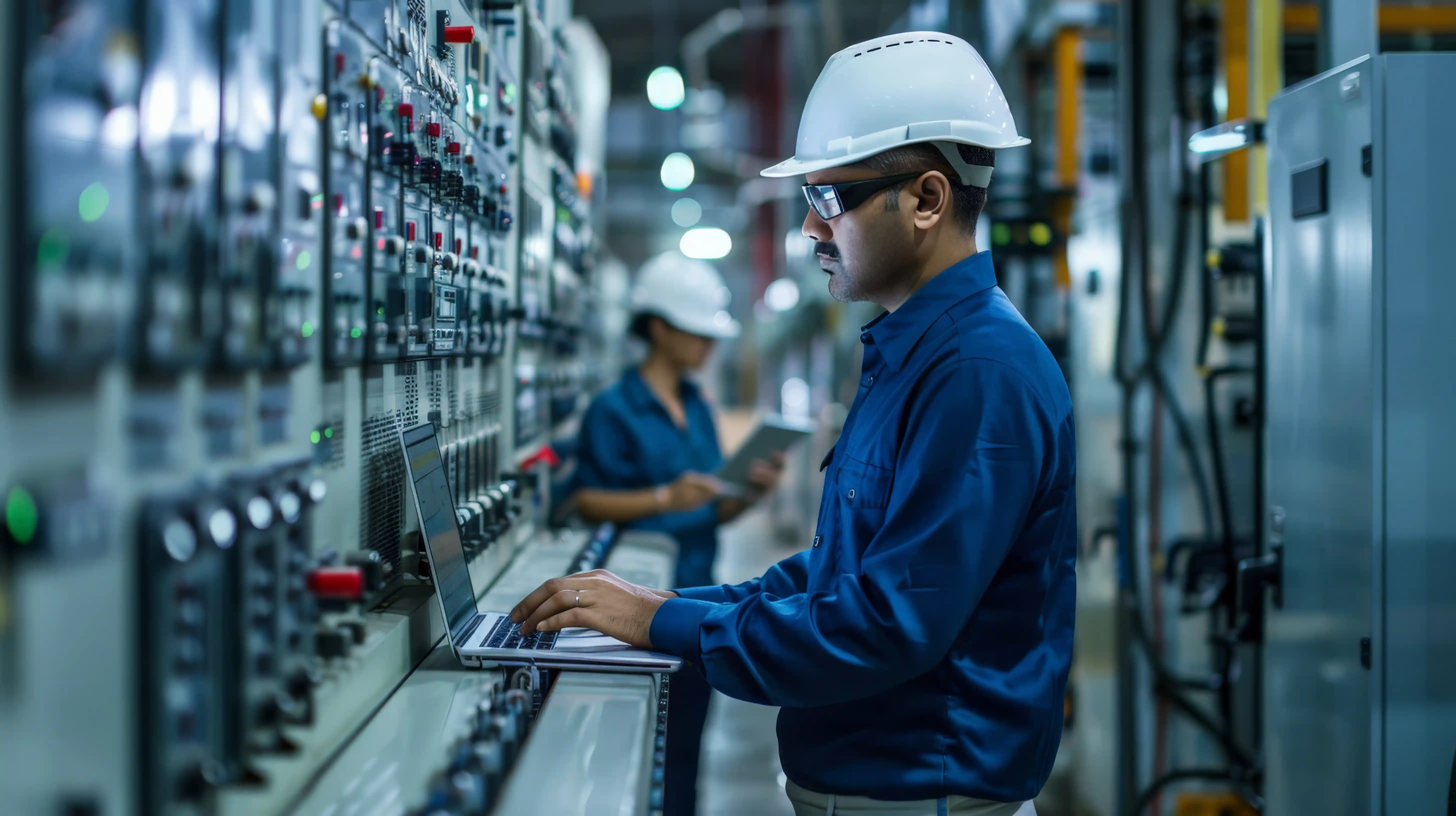
The electrical industry is evolving faster than ever. As demand grows for safer, smarter, and more energy-efficient products, manufacturers are under pressure to increase productivity — without compromising quality.
That’s where automation manufacturing steps in.
From precision assembly to real-time quality checks, automation transforms complex electrical production processes into efficient, repeatable, and reliable systems. Today, companies that invest in automation are seeing dramatic improvements in output, accuracy, and cost control — while staying competitive in a rapidly changing market.
Below, we explore how automation is reshaping the electrical industry and how specialized solutions such as Pick And Place, Coil Winding & Resistance Welding, Measurement & Inspection, Vision Systems, Robotic Handling, and Palletising are driving the next generation of manufacturing.
Why Automation Matters in the Electrical Industry
Electrical components demand high precision. A single defect in an electrical contact, coil, wire connection, or circuit can lead to product failures, safety hazards, and financial losses.
Manual processes struggle to meet such strict standards — especially at high volumes.
Automation solves this challenge by:
- Ensuring consistent product quality
- Reducing human error
- Increasing production speed
- Lowering labor costs
- Enhancing workplace safety
- Enabling round-the-clock manufacturing
- PCB component placement
- Assembling connectors and switches
- Handling delicate electrical parts
- Feeding parts into automated machines
- Consistent weld strength
- Reduced overheating
- Better electrical conductivity
- Lower risk of rework or failure
- Detect defects instantly
- Maintain compliance with industry standards
- Reduce scrap and rework
- Ensure product traceability
- Surface defects
- Missing components
- Improper solder joints
- Incorrect assembly orientation
- Labeling accuracy
- Reduced workplace injuries
- Greater precision
- Reliable performance under heavy loads
- Flexible reprogramming for new product lines
- Increased ProductivityAutomation enables continuous, high-speed production — maximizing daily output.
- Improved Quality & ConsistencyMachines repeat the same process with ultra-high precision, reducing defects dramatically.
- Reduced CostsLower labor requirements, fewer errors, and minimized scrap save significant operational costs.
- Safer Work EnvironmentAutomation removes operators from hazardous processes, reducing injury risks.
- Scalability & FlexibilityAutomated systems can be upgraded or reprogrammed as new product lines are introduced.
- Real-Time Data & InsightsSmart machines provide production analytics, enabling faster decisions and better process optimization.
- IoT-connected equipment
- AI-driven decision-making
- Predictive maintenance
- Digital twins
- Cloud-based production monitoring
In short, automation doesn’t just streamline operations — it creates smarter, more resilient factories.
Key Automation Solutions Transforming Electrical Manufacturing
1. Pick And Place Automation
Pick And Place systems are the backbone of automated assembly lines. Using robotic arms and precision control systems, they quickly move components from one station to another — with exact placement every time.
Typical applications include:
Benefits include faster cycle times, reduced manual handling, and minimal part damage.
Coil Winding & Resistance Welding
In motors, transformers, relays, and inductors, coil winding must be exact. Automated systems ensure uniform tension, precise turns, and consistent layering — something nearly impossible to guarantee manually.
Pairing coil winding with resistance welding creates seamless, reliable connections between wires and terminals. Automated welding ensures:
This combination is essential for manufacturing products that must perform safely for years under electrical load.
Measurement & Inspection Automation
Quality control is non-negotiable in the electrical industry.
Automated Measurement & Inspection systems evaluate components in real time, checking dimensions, alignment, electrical continuity, tolerances, and structural integrity.
They help manufacturers:
Instead of relying solely on manual operators, automated inspection delivers objective, data-driven results every shift.
Vision Systems
Vision Systems take inspection to the next level using AI-driven cameras and image processing.
They can detect:
Robotic Handling
Electrical components often require delicate yet fast handling. Robotic Handling systems automate tasks such as loading, unloading, assembling, sorting, and transferring parts between workstations.
Advantages include:
Robots thrive in repetitive environments — freeing operators to focus on supervision and optimization.
Palletising Automation
At the end of the line, products must be packed and stacked efficiently. Automated Palletising solutions organize boxes, trays, or finished components into uniform pallets ready for storage or shipment.
This eliminates manual lifting, speeds up dispatch operations, and ensures cleaner logistics flow.
Benefits of Automation in Electrical Manufacturing
Automation and the Future of the Electrical Industry?
As industries embrace Industry 4.0, automation will go beyond machines performing repetitive tasks. Smart factories will integrate:
Final Thoughts
Automation manufacturing is no longer optional in the electrical industry — it’s the foundation of sustainable growth, precision, and efficiency.
From Pick And Place and Coil Winding & Resistance Welding to Measurement & Inspection, Vision Systems, Robotic Handling, and Palletising, automation ensures that every product leaving the line meets the highest standards of quality and performance.
Whether you're upgrading existing systems or building a fully automated production line, the right automation partner can transform your manufacturing capabilities — and prepare your business for the future.
FAQ
Automation manufacturing uses advanced machines, robotics, and control systems to perform repetitive electrical production tasks with high precision, consistency, and speed.
Automation reduces human error, improves product quality, increases production speed, enhances worker safety, and lowers long-term operating costs.
Key solutions include Pick And Place systems, Coil Winding & Resistance Welding, Measurement & Inspection, Vision Systems, Robotic Handling, and Palletising.
Vision Systems use AI-powered cameras to detect defects, misalignment, missing components, and surface flaws — ensuring every product meets exact quality standards.
Automated Palletising speeds up packing operations, ensures uniform stacking, reduces labor fatigue, and streamlines shipping logistics
Initial investment may be higher than manual processes, but automation delivers fast ROI through increased productivity, lower scrap, reduced labor costs, and consistent output.